3 Key Factors That Affect How Much It Costs to Replace Kitchen Cabinets
Replacing kitchen cabinets can feel overwhelming, especially when you’re trying to figure out how much it will cost. You’re not alone—many people struggle with budgeting for this important home upgrade. Understanding the main factors that influence the price can make the process a lot less stressful and help you get the best value for your money.
When replacing your kitchen cabinets, three main factors affect the cost. First, the material you choose, like solid wood or MDF, impacts durability and price.
Next, your kitchen’s size and layout matter; larger or complex spaces require more cabinets and customization.
Finally, installation complexity like uneven walls or special designs can raise labor costs.
Understanding these basics helps you plan your budget wisely, and exploring further can reveal tips to optimize quality without overspending.
Key Takeaways
- Cabinet material choice significantly impacts cost, with solid wood being pricier than plywood or MDF options.
- Kitchen size and layout complexity increase costs because more cabinets and custom designs are needed.
- Installation difficulty, including uneven surfaces and plumbing reroutes, raises labor expenses.
- High-end finishes and premium hardware add to overall replacement costs.
- Investing in durable materials can reduce long-term expenses by minimizing future replacements.
How Cabinet Materials Affect Replacement Costs
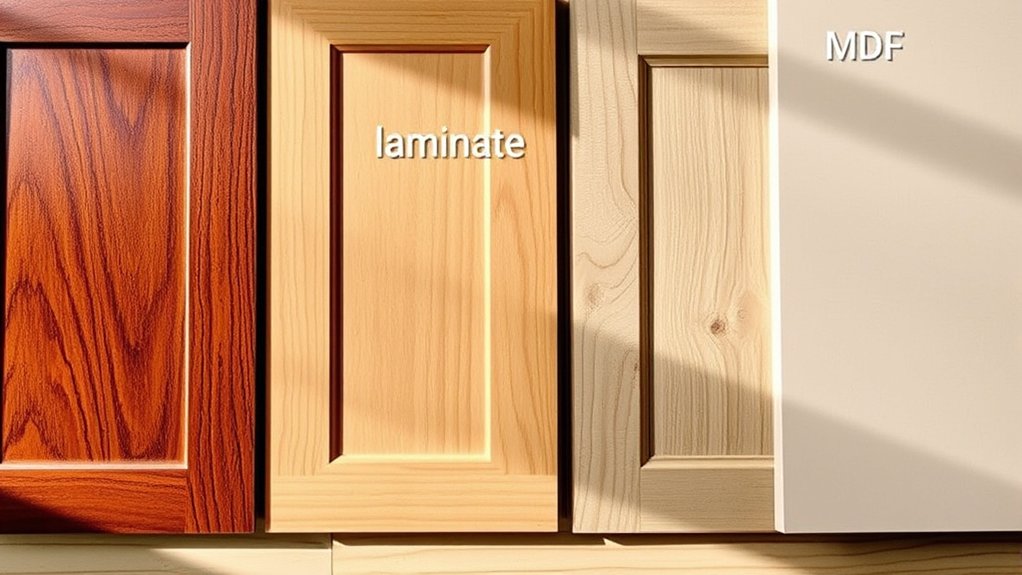
When you choose cabinet materials, you directly influence the overall replacement cost. Different materials like solid wood, plywood, or MDF vary considerably in price. Solid wood cabinets tend to be pricier but offer durability and a premium look.
Choosing cabinet materials greatly impacts replacement costs, with solid wood offering durability but at a higher price.
On the other hand, MDF or particleboard options can save you money upfront but may not last as long. Your choice of cabinet finishes also affects costs. Painted or stained finishes can add to the labor and material expenses, especially if you want a high-gloss or custom color.
Don’t forget hardware selection. Opting for premium handles, knobs, and hinges can enhance the cabinet’s style but increase your budget. Balancing durability, aesthetics, and price will help you pick the right materials without overspending.
Keep in mind that investing in better materials and finishes often pays off with longer-lasting, more attractive cabinets, reducing future replacement needs.
How Kitchen Size and Layout Impact Replacement Costs
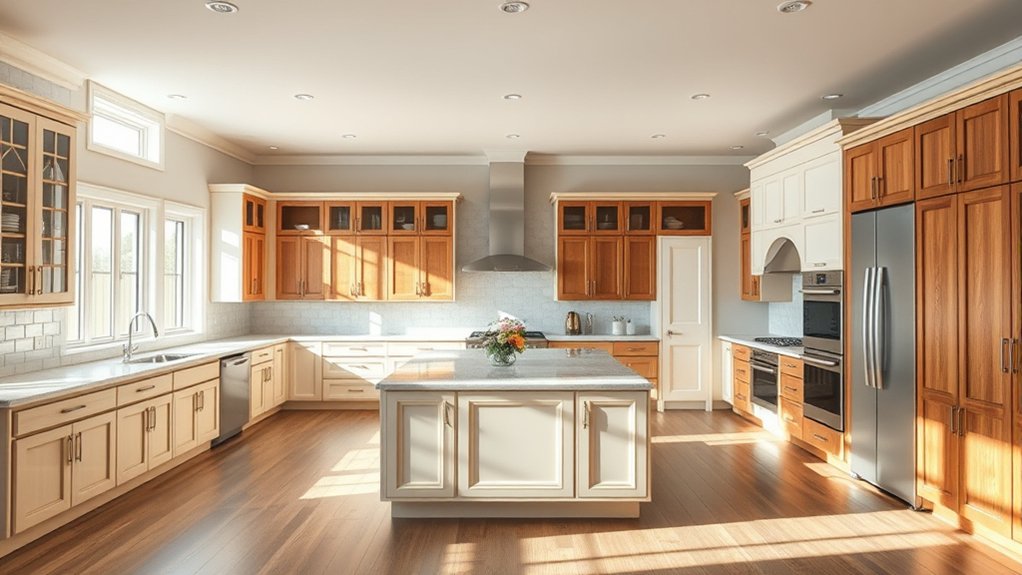
How much your kitchen costs to update often depends on its size and layout. Larger kitchens naturally require more cabinets, which means you’ll spend more on materials and labor. If your kitchen has a complex layout with multiple corners or islands, it can also increase the number of custom cabinets needed.
The cabinet style you choose affects costs, too. Intricate designs or specialty finishes typically raise the price. Likewise, the cabinet finish impacts the overall budget; high-end finishes like custom paints or glazes can be pricier than standard stains or laminates.
When planning your replacement, consider how your kitchen’s shape influences cabinet placement. A straightforward, open layout is generally more cost-efficient. Unusual angles or tight spaces might limit your options and add expense.
Understanding these factors early helps you select cabinet styles and finishes that fit your kitchen’s size and layout without breaking the bank.
How Installation Complexity Raises Your Cabinet Replacement Bill
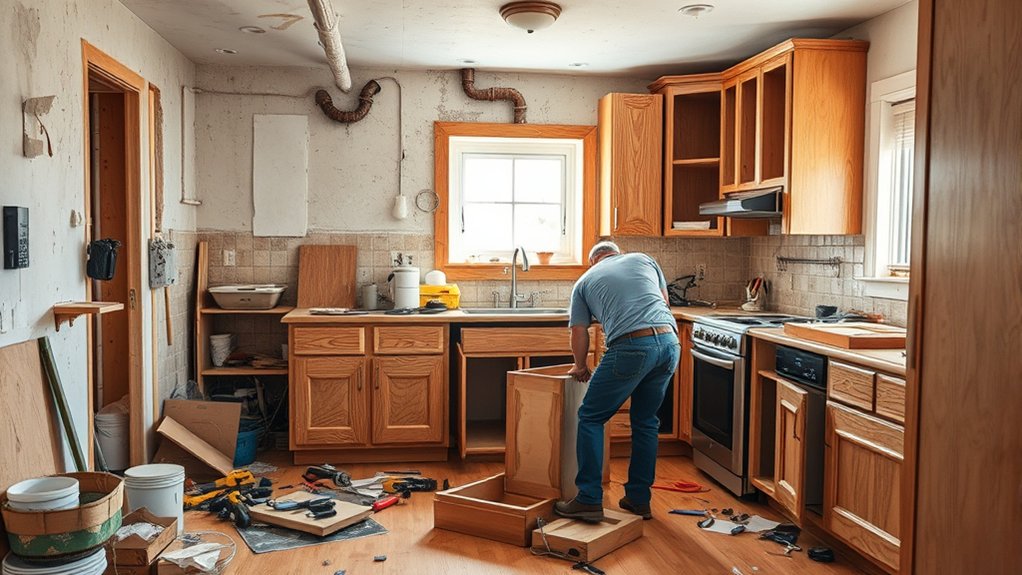
Besides kitchen size and layout, the complexity of installation plays a big role in your cabinet replacement costs. When your cabinet design includes custom features like intricate moldings, unusual shapes, or built-in appliances, the installation process demands more time and skill.
This complexity can extend the installation timeline, raising labor costs considerably. If your kitchen has uneven walls or floors, installers must make adjustments, adding to both time and expenses.
Additionally, if your project requires rerouting plumbing or electrical work to fit new cabinet layouts, expect the installation timeline and cost to increase. Even the removal of old cabinets can become costly if they’re glued or nailed tightly, requiring extra effort.
Frequently Asked Questions
How Long Does a Typical Cabinet Replacement Take?
A typical cabinet replacement usually takes about 3 to 7 days, depending on the project timeline. You’ll start with cabinet removal, which can take a day or two if you have a lot to take out.
After that, installation begins, and it might take several days to fit and secure new cabinets properly. If you want it done faster, coordinating well with your contractor helps keep the project on track.
Can I Keep My Old Cabinet Hardware?
You absolutely can keep your old cabinet hardware, but it might feel like trying to fit a square peg in a round hole if you’re aiming for a fresh look. While hardware upgrades can dramatically change your kitchen’s vibe, sticking with your current knobs or pulls could limit aesthetic considerations.
If your hardware is outdated or worn, swapping them out is a small change that packs a huge punch in updating your cabinets’ style.
Are Custom Cabinets More Cost-Effective Than Stock Cabinets?
Custom cabinets usually aren’t more cost-effective than stock cabinets because custom pricing includes cabinet customization tailored to your exact needs, which drives up the price. However, if you want unique designs or specific dimensions, custom options might save you money in the long run by avoiding costly modifications later.
Do Cabinet Warranties Cover Installation Issues?
Think of cabinet warranties as a safety net, but not a magic shield. They usually cover defects in materials and workmanship, not installation disputes.
So, if a cabinet door falls off because of poor installation, your warranty likely won’t step in. You’ll need to address installation issues separately, often through the installer or contractor.
Always read your warranty coverage carefully to understand what’s protected and what isn’t.
What Maintenance Extends the Life of New Cabinets?
To extend the life of your new cabinets, you should regularly do cabinet cleaning using a soft cloth and mild cleaner to prevent buildup and damage. Don’t forget hardware maintenance. Tighten screws and lubricate hinges to keep doors and drawers working smoothly.
Avoid harsh chemicals and excessive moisture, which can warp or damage surfaces. By staying consistent with these simple steps, you’ll keep your cabinets looking great and functioning well for years to come.
Conclusion
Replacing your kitchen cabinets is like planting a garden. You’ll want to choose the right materials as your soil, consider the size of your space like the garden’s layout, and prepare for the work involved, much like tending to each plant.
By understanding these key factors, you’ll nurture a beautiful, functional kitchen that grows in value and joy. Keep these in mind, and your investment in replacing your kitchen cabinets will truly blossom.